May 19, 2026
12 Family Portrait Poses That Actually Look Natural
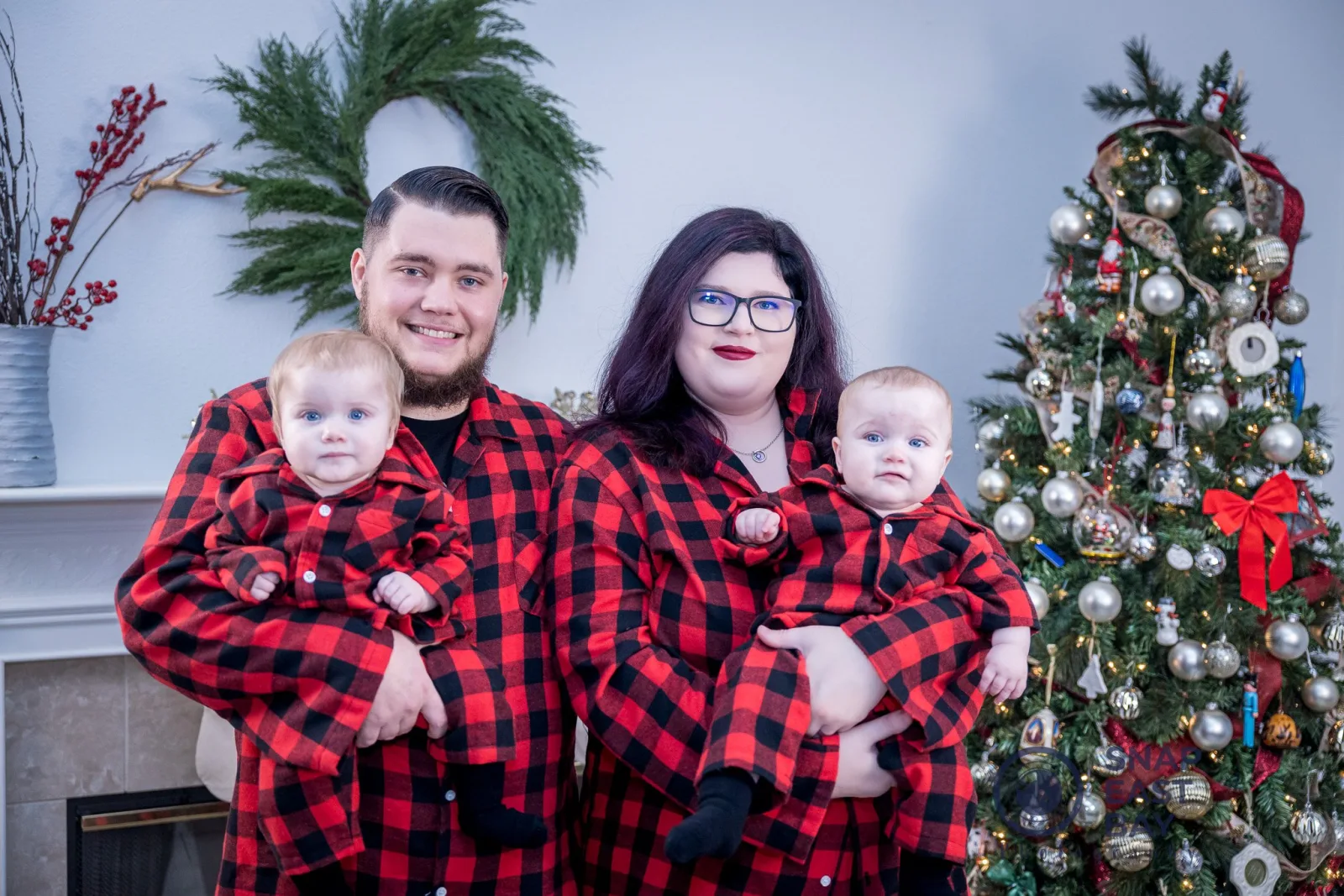
Most photographers hand you a pose guide and call it preparation. What they're actually handing you is a list of shapes — triangle, lineup, walking shot — that worked for someone else's family on someone else's shoot day. That's not preparation. That's decoration.
The poses below are organized by what they accomplish: connection, hierarchy, movement, contrast. Pick the ones that match your family's energy. Leave the rest.
Why pose lists fail
The problem isn't the poses. It's that most lists treat posing as the goal instead of the starting point. A good photographer uses poses the way a contractor uses a blueprint — as a reference, not a script. The blueprint doesn't tell you what the house will feel like to live in. Neither does a Pinterest grid of smiling families on blankets.
What follows are 12 poses I use across nearly every session — newborns to four-generation extended families of 14. Each one includes why it works, who it works for, and the specific adjustment that separates a stiff shot from a real one.
The 12 poses
1. The Triangle
Two parents standing close, child or children in front and slightly off-center. Parents' heads form the apex; kids fill the base.
Works for: any family of 3 to 5 where the parents are taller than the kids.
Why it works: the triangle is the most visually stable shape in composition. Eyes rest on the apex, then sweep down across the kids. Height differences disappear. Nobody fights for the front of the frame.
The fix: ask the parents to look at each other before turning to camera. The first attempt is awkward. The third one is the shot.
2. The Wrap
One parent seated or standing, the other wrapped around them from behind — arms loose around the waist or shoulders. Kids tucked in front or off to the side.
Works for: couples with younger kids, or families where the dynamic is clearly "we're a unit."
Why it works: arms-around-the-back communicates safety without anyone having to perform it. The viewer reads the whole household in one frame.
The fix: back parent's chin rests on the front parent's shoulder, not on top of their head. Top-of-head reads as a high school dance photo.
3. The Walk-Toward
Family walks slowly toward the camera, holding hands, talking to each other. Shoot 15 to 20 frames as they close from 20 feet to 5 feet. Do not ask them to look at the camera.
Works for: any family with kids old enough to walk.
Why it works: movement breaks the "I'm being photographed" tension faster than any direction you can give. Three out of four frames are unusable. The fourth is the one they print.
The fix: give them a question to ask each other mid-walk. "What's your favorite kind of pizza?" works every time. The laughter is unposed and it shows.
4. The Sit-Down Stack
Everyone on the ground, staggered in height. Front row cross-legged, middle row knees up, back row kneeling close behind.
Works for: groups of 5 or more where a standing lineup would look like a school photo.
Why it works: ground-level shots read as intimate. The staggered heights create depth and prevent the row-of-fence-posts problem.
The fix: have the front row lean back slightly into the people behind them. Physical contact between rows is what makes it look like a family instead of a group.
5. The Hand-Off
One parent lifts a young child up to the other, or passes them mid-air. Catch the moment the kid laughs.
Works for: families with kids under 6 and parents who can lift them.
Why it works: you're documenting something this family actually does. It's not a pose — it's a real moment slowed down enough for the camera to catch it.
The fix: do it four times. The first is "we're doing the thing." The fourth is "I forgot the camera was here."
6. The Forehead Touch
Two faces close, foreheads touching, eyes closed or looking down. Works for parent-and-newborn most often, but also siblings and grandparent-and-grandchild.
Why it works: this is the one they frame in the bedroom. It's quiet, private, and it reads the same way decades from now as it does the day it's taken.
The fix: get close. Shoot at 50mm, f/2 or tighter. Loose framing kills the intimacy entirely.
7. The Over-the-Shoulder
Photograph the family from behind, looking out at a view — a garden, a coastline, a ridgeline at sunset.
Works for: families who hate being photographed but love a location.
Why it works: no faces, no pressure. The image is about the family's relationship to a place and to each other. Nobody has to smile on command.
The fix: lower the camera to waist height or below. More sky in the frame. The family reads as a silhouette of connection, not the subject of a documentary.
8. The Lean-In
Two people standing side by side, one tilts their head onto the other's shoulder. Works for couples, parent-and-teen, siblings.
Why it works: it's the most natural physical gesture there is, and it photographs as warmth without requiring a smile on command.
The fix: the head should fall, not be placed. Ask them to take a breath and exhale into the lean. The neck relaxes, the shoulders drop, and the photo stops looking like a pose.
9. The Story Circle
Everyone seated in a loose circle, knees almost touching, one person telling a story. Shoot from outside the circle, between two people's shoulders, capturing the listeners.
Works for: extended families, multi-generational sessions.
Why it works: you get the expressions you'd never get from a posed group shot. The grandmother laughing at the dad's joke. The teenager actually paying attention to her uncle. Candid photography of a planned setup.
The fix: pick the family's actual storyteller and give them a specific prompt. "Tell everyone about the time we lost the dog at Yosemite" produces real reactions. Vague prompts produce vague faces.
10. The Solo with Reaction
One family member in sharp focus, others slightly out of focus in the foreground or background reacting to them.
Works for: highlighting a kid's moment, or a portrait of one person that still reads as a family photo.
Why it works: it's the closest a portrait gets to cinema. The reaction shots tell the viewer who this person is to everyone else in the frame.
The fix: shoot wide aperture, f/1.8 to f/2.8, and focus carefully. The blur needs to be obvious enough to read as intentional. Soft blur reads as a mistake.
11. The Generation Stack
Grandparent, parent, and child arranged so all three faces are visible. Usually grandparent and child seated, parent kneeling behind.
Works for: any session with more than one generation present.
Why it works: three generations in one frame does work that no other photo can. This is the one they keep for 40 years.
The fix: close the eye-line gap. If the grandparent is seated and the parent is standing, kneel the parent down. Wide height gaps make it hard to read all three faces at once.
12. The Real-Life Frame
No posing. Set up a scene — making pancakes, walking the dog, playing a board game — and document it for 15 minutes.
Works for: any family, any session.
Why it works: posed photos age. Documentary moments don't. This is the only one of the twelve that consistently passes the "do I still like this photo five years from now?" test.
The fix: don't direct the look — direct the action. "Mom, ask him about his day" works. "Okay, everyone smile at the camera" breaks the whole thing. Watch, anticipate, shoot.
How to use this
Pick three or four that fit your family. Triangle for a tight group of four. Walk-Toward for kids who need to burn energy. Forehead Touch for a newborn session. Real-Life Frame for a home shoot.
The poses are a tool. The session is the work.
If you're local to the SF Peninsula and want to learn how to actually direct real families — not just know the poses but know when to use them — that's what the private photography lessons are for. In-person on the Peninsula or live on Zoom. Posing real families is the most-requested topic. Reach out and we'll figure out if it's the right fit.